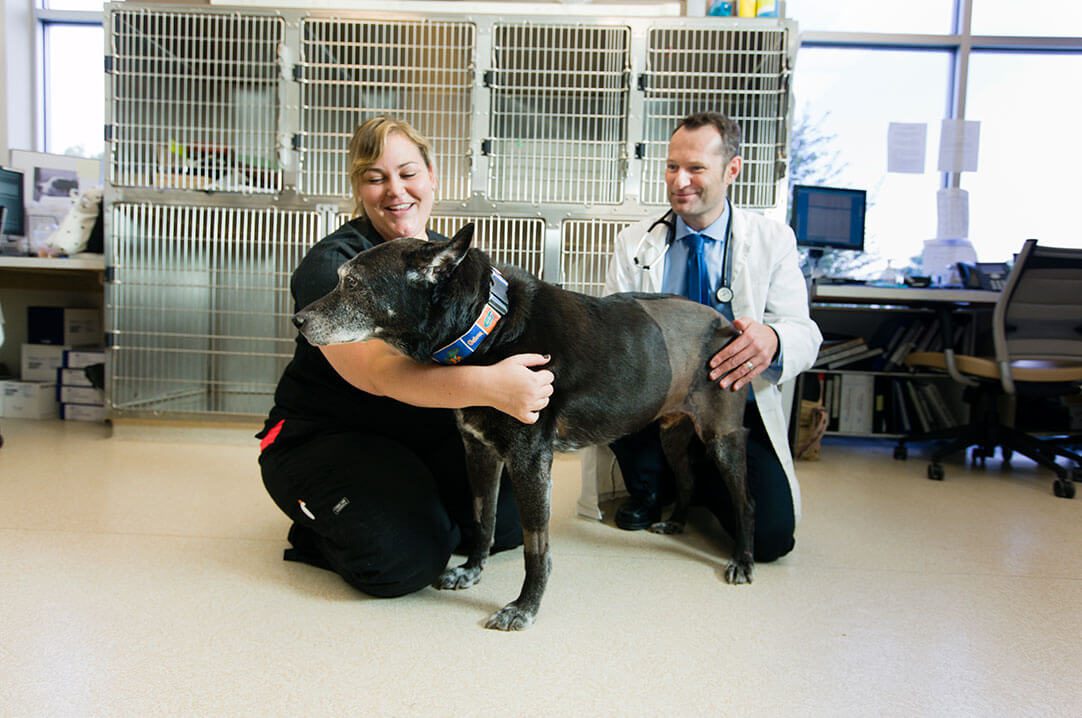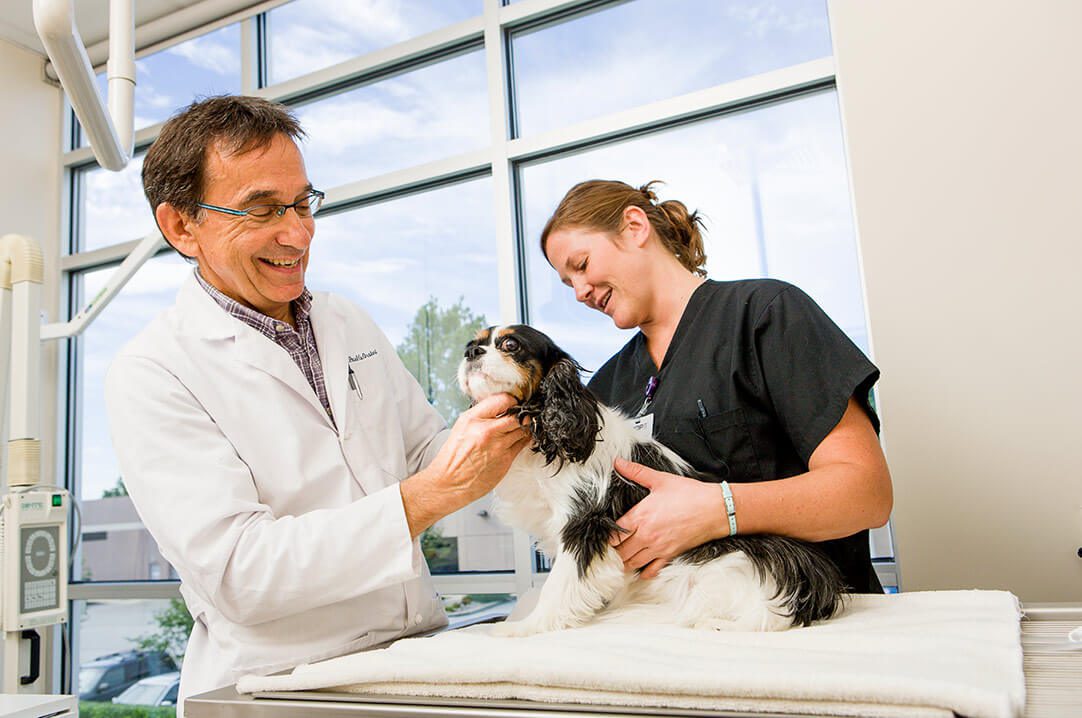
All of the staff, from the front desk to the nurses to the doctors, not only took care of my Lex, but they also took care of me - and for that I am grateful!
Eileen
Mechanicsburg, PA
Spring has officially sprung as the bulbs start to peak their flowery heads to the surface. Its easy to get distracted as we start to wake from our winter hibernation so Hope VS just wanted to remind everyone of the two most common pet emergencies we see this time of year, Easter lilies and chocolate.
Lilies
Easter lilies, or any flower in the lily family for that matter, are extremely toxic to cats. Ingestion of any part of this flower or plant, even the smallest amount, can be deadly. Guess what, EVEN that pesky staining orange pollen is toxic! Be sure to bathe your cat if you see this pollen on their face or coat after a romp in the garden. They could ingest it if they try to groom themselves.
We still aren’t sure just what causes the toxicity or why it effects cats and not other species such as a dog or rabbit in the same way. There is no antidote for lily toxicity so quick action is imperative to your pet’s survival. Symptoms of ingestion can start within 6 to 12 hours. Keep an eye out for:
- Vomiting
- Drooling
- Lethargy
- Tremors
- Seizures
- Loss of appetite
Kidney failure can occur in 36-72 hours after ingestion and it is essential to treat with aggressive fluid therapy. Sub cutaneous fluids is not enough for these cats. Signs of kidney failure are:
- Increased urination, followed by decreased urination, followed by no urination
- Increased thirst
- dehydration
- death
If you suspect that your cat has ingested any part of the lily plant, including pollen, please consult HOPE VS immediately.
Chocolate
Everyone is outside watching the kids look frantically for those Easter eggs you just filled with jellybeans and chocolate. Its easy to forget you left the remaining bag of Hershey’s kisses on the kitchen table where Fido is more than happy to discover his own Easter treat. Chocolate is a common ingestion amongst dogs cause they have excellent sniffers and let’s face it, who doesn’t crave a little chocolate from time to time? Its important to note that even though dogs are the most common culprits of chocolate ingestion, cats have been known to take a nibble or two.
Chocolate is derived from the seeds of Theobroma cacao, which contains caffeine and theobromine. These two substances within the seed can have toxic effects on animals so the amount of chocolate ingested is important to know when talking to a veterinary professional. The types of chocolate that are concerning are:
- Bakers Chocolate-highest concentration of caffeine and theobromine. As little as two ounces can be toxic to a 20 lb dog.
- Semi-sweet chocolate
- Milk Chocolate
- Coco powder
Signs of chocolate ingestion for dogs and cats are:
- Vomiting
- Diarrhea
- Rapid breathing
- Muscle Rigidity
- Seizures
- Increased heart rate
- Weakness
- Increased temperature
If you have a concern that your dog has consumed some of the sweet stuff, please give us a call so we can help you. In addition the ASPCA animal poison control center is a good resource for any animal poison-related emergency, 24 hours a day, 365 days a year. They can be contacted at (888) 426-4435. (A $65 consultation fee may be applied to your credit card.)

It’s time to get YOUR Bark and Bowl On!! The National Canine Cancer Foundation is proud to present the Bark and Bowl! The Inaugural Bark and Bowl was so much fun and such a success that now we are bringing it to YOU! Love to bowl and love dogs? Don’t like to bowl but love dogs? Well either way you will have a blast.
Lace up your bowling shoes (if they haven’t been chewed up!), grab your bowling ball and help find a Cure for Canine Cancer.
Bowl under the best light and sound shows around, glow balls whizzing down the alley, great music to dance to and tons of great prizes. Not to mention drinks, team photos and the Dog House Vendor Area! All proceeds from the Bark and Bowl event benefit the NCCF.
Did you know that 1 in 3 dogs will be affected by Cancer? And of those half will die. We are out to break that cycle! The NCCF will provide the action, YOU provide the teams and Bowl for dogs around the world. Bring your family, friends and co-workers, start a team or join one. Come party with the NCCF at premier bowling centers across the country.
“If we all BOWL together, We are the Cure!”

Categories: News
Our exciting journey has begun and we are one step closer towards moving into our new state of the art patient centered care facility-literally! In fact, you will be able to see the progress of our new hospital just as we can because our temporary home is located right next to the new building currently under construction.
Our new address is 40 Three Tun Road in Malvern, PA 19355 and our phone number remains the same: 610-296-2099.
As of Monday January 7th, Hope VS no longer resides within the Veterinary Referral Center at 340 Lancaster Avenue. No worries, we are just 0.8 miles around the corner and will continue to offer the same quality comprehensive care you have come to expect from us. In fact, we are now delivering you more! We have added surgery and oncology to our expanding list of services and more is to come in the near future. Hope VS continues to be the ONLY specialty referral hospital in Chester County that can deliver critical care emergency medicine overseen by two board certified trained criticalists to care for your pet in need.
We apologize for any inconvenience but rest assured the same dedicated staff and commitment to the care of your pets are still our number one priority.
Categories: News

Having recently moved from Philadelphia to the suburbs with our three dogs, we’ve recently encountered a downside of “country life.” Two of the dogs are completely obsessed with eating acorns, and, unfortunately for us, our new backyard is loaded with them.
Wondering if this is a problem, I visited the go-to place for all things related to pet poisons, http://www.aspca.org/Pet-care/ask-the-expert/ask-the-expert-poison-control/acorn, and this is what they had to say:
Acorns (Quercus spp.) contain a toxic principle called Gallotannin. In cows and horses who repeatedly ingest significant amounts, we have seen potentially severe gastrointestinal irritation, depression and kidney damage.
Dogs, however, generally do not forage on acorns as livestock do—and even if they do ingest several acorns, it is usually an acute (single) exposure, not a chronic situation. In these cases, we typically only see mild to moderate gastrointestinal upset, which can include vomiting, diarrhea and abdominal discomfort. However, there is also the potential for mechanical irritation (from the sharp fragmented pieces of acorn), and possible obstruction, should a large amount of acorn material become lodged in the GI tract.
Yikes.
We’d seen some of the “moderate gastrointestinal upset,” usually at 3 am (of course!), and so we decided we’d have to be more vigilant about monitoring the boys’ backyard behaviors. As a result of this, we now more carefully supervise our dogs, stopping them, if we can (they’re speedy!), from eating acorns—or, at least massive amounts of them, but they sure do seem to love them (and be able to sniff them out). We’re doing better, and we certainly know that a little policing now is certainly worth avoiding potential head- and heartache later!

Photo: As good as new. Veterinary cardiologists and criticalists from Hope Veterinary Specialists in Malvern, PA who had reached out to neighboring human Paoli Hospital’s Interventional Radiology Laboratory for help in saving a little Maltipoo’s life, came to visit along with their patient and his owner. In Photo, Caral Wright holds Ziggy, from left, Hope VS’s Dr. Dennis Burkett, Erika Fauth, Cardiology Nurse, Dr. Steven Cole; and Paoli Hospital’s Dr. Atul Gupta and physician assistant Joan Bennett.
DACVECC Veterinarians reach out to neighboring human Paoli Hospital when complications arise.
Caral Wright of Media, PA wasn’t in the market for a dog, but couldn’t resist a classified ad for a five-month-old white Maltipoo. She named him Ziggy. Next thing she knew she was saving the little dog’s life. During his routine puppy check Ziggy’s regular veterinarian hearing a loud heart murmur suspected a congenital heart problem. She sent him to the cardiologists, who also happen to be board certified in emergency medicine and critical care, at Hope Veterinary Specialists (Hope VS) in Malvern, PA to be evaluated.
“Ziggy essentially had a hole in his heart,” explained Steven Cole, DVM DACVECC DACVIM (Cardiology), who along with Dennis Burkett, VMD, PhD DACVECC DACVIM (Cardiology) diagnosed the problem as a patent ductus arteriosus (PDA), a rare congenital heart defect seen in dogs and even more rare in cats. They explained that the connection between the aorta (the major blood vessel supplying blood to the body) and pulmonary artery (the major blood vessel supplying blood to the lungs) should close at birth. This did not happen for Ziggy; without repair he could develop congestive heart failure and possibly die.
The veterinary cardiologists and criticalists repair a dog’s heart much like a human’s, by inserting a single coil or multiple coils into the connection between the aorta and pulmonary artery. The coil and the associated blood clot effectively prevent blood from going from the aorta into the pulmonary artery inappropriately. The coil remains in place permanently, thereby permitting the blood to clot and ultimately seal-off the connection.
During the procedure “before the blood had a chance to clot and secure the coil it slipped and traveled down the aorta, lodging in the vessels leading toward Ziggy’s hind legs,” Dr. Cole recalled. “We knew we had a problem but we also knew we could fix it by retrieving the coil with a snare.”
Hope VS was in the midst of upgrading its interventional radiology laboratory, however, and in the activity surrounding the upgrade an appropriately sized snare could not be found. With Ziggy still under anesthesia the veterinarians acted quickly to find a solution. They called their neighbors at Paoli Hospital, a human hospital in nearby Paoli, PA, and were put in touch with Dr. Atul Gupta, Director of the Interventional Radiology (IR) Laboratory. Dr. Gupta, along with the IR Lab’s physician assistant, Joan Bennett, came to the rescue.
“Dr. Burkett scrubbed out of the procedure and went to Paoli Hospital while Dr. Cole used a second coil to successfully close the ductus. We found several snares similar to what they needed,” said Dr. Gupta. Dr. Gupta quickly reviewed a quick set of instructions and the equipment to help Drs. Cole and Burkett through the case. Dr. Burkett returned to Hope VS, passed off the equipment to Dr. Cole who quickly and effectively retrieved and stabilized the dislodged coil. The procedure was successful and Ziggy lived!
Meanwhile, Caral Wright was waiting and wondering what was taking so long. “The staff at the VRC told me there were complications but assured me Ziggy was going to be fine.”
The veterinarians were able to retrieve the coil and moved it to an area where it could be removed surgically the following day. “Four days after the surgery he was running around like nothing had ever happened to him,” remembers Caral Wright. “I strongly believe I was meant to have this dog and save his life.”
Categories: News
Tags: cardiology